How Industrial Brushes Improve Food Processing Safety and Hygiene
By Yew Lee Pacific Group ・ 3 mins read
In food processing, hygiene isn’t just about what you can see — it’s about every surface, every gap, and every tool that comes in contact with your production environment. Industrial brushes play a bigger role in food safety than most manufacturers realise, and choosing the wrong one can introduce contamination risks into your hygiene programme.
What Makes a Brush Food-Grade?
Not all industrial brushes are suitable for food environments. The key differences come down to material and construction:
- Bristle material — Food-grade brushes use FDA-compliant nylon or polypropylene bristles that are safe for food contact. Metal filaments are generally not recommended for direct food-contact applications, as wire fragments may contaminate product streams if damaged or worn.
- Bristle anchorage — Heat-set bristles are the recommended choice for food environments.
The high-heat manufacturing process secures bristles firmly, helping to minimise bristle shedding even during high-temperature wash-downs and high-pressure cleaning. Resin-set brushes may not be suitable for certain food-contact applications, as resin degradation or flaking could create contamination risks over time.
- Non-porous surfaces — Brush bodies should be smooth and non-porous so they don’t absorb moisture or food residue between uses.
- Colour-coding — Many HACCP-compliant facilities use different brush colours per production zone to prevent cross-contamination between raw and ready-to-eat areas
A bristle shed from a non-food-grade brush is a physical contamination incident. Under HACCP (MS 1480:2025) and BRCGS requirements, your cleaning equipment should be hygienically designed and fit for purpose.
Where are These Brushes Used?
Industrial brushes serve a wide range of functions on a food production line:
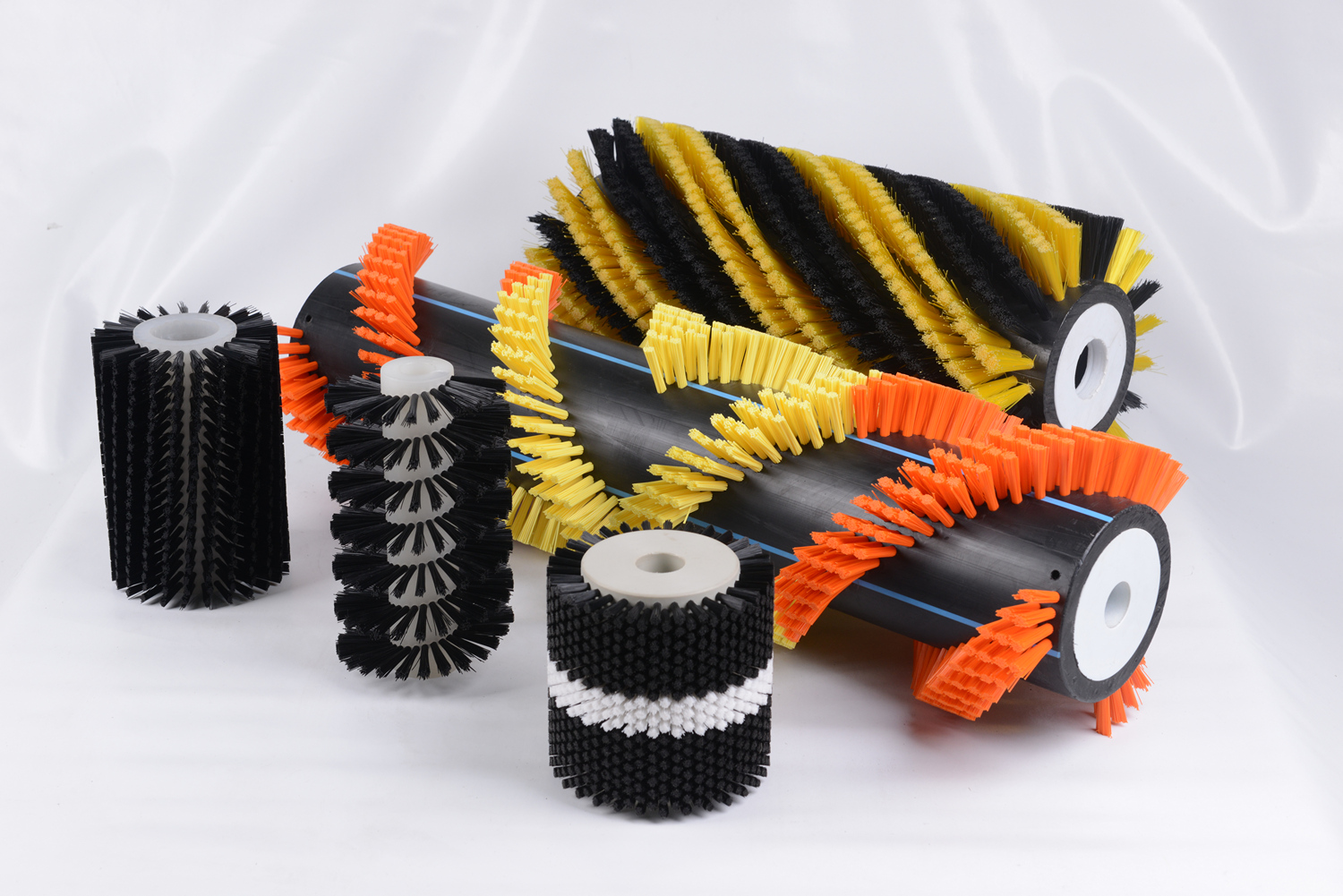
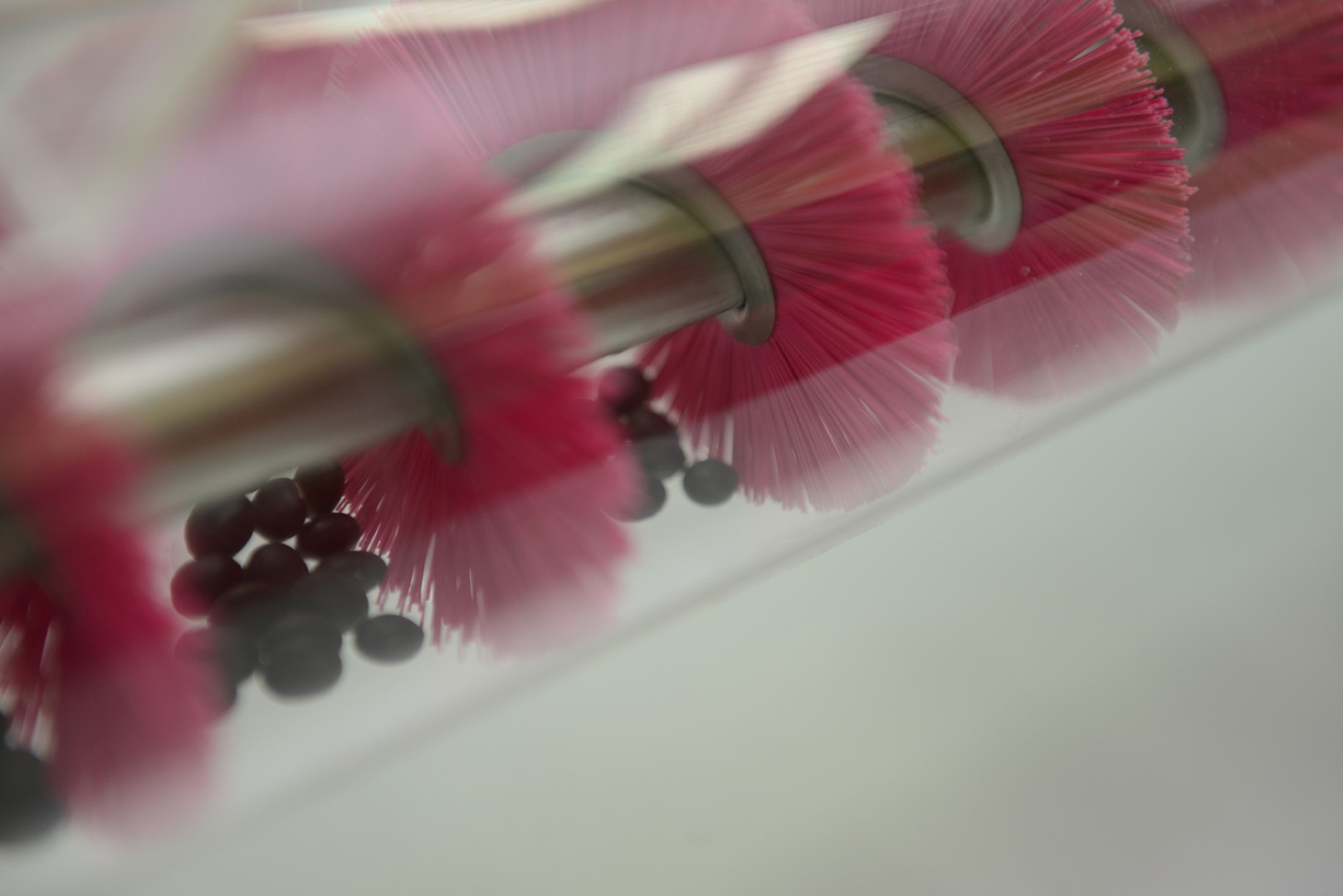
- Roller brushes — Clean belt surfaces between product batches to prevent residue build-up and cross-contamination.
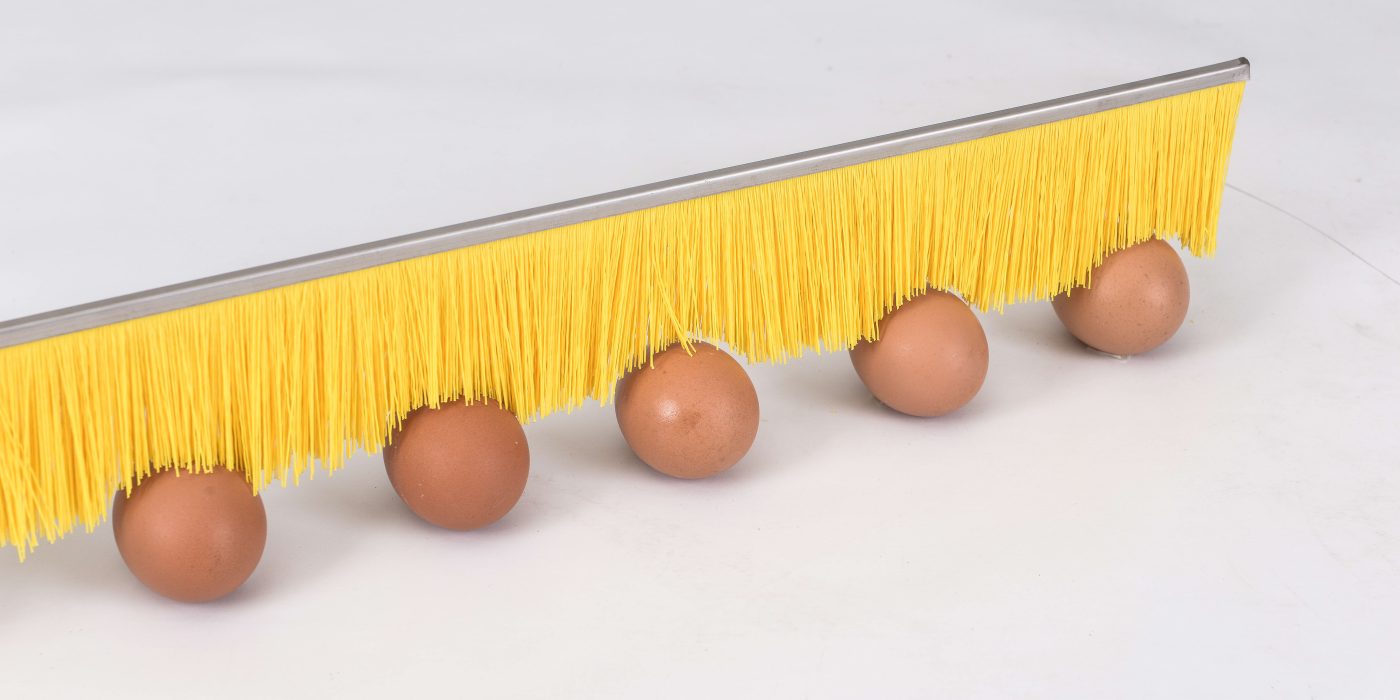
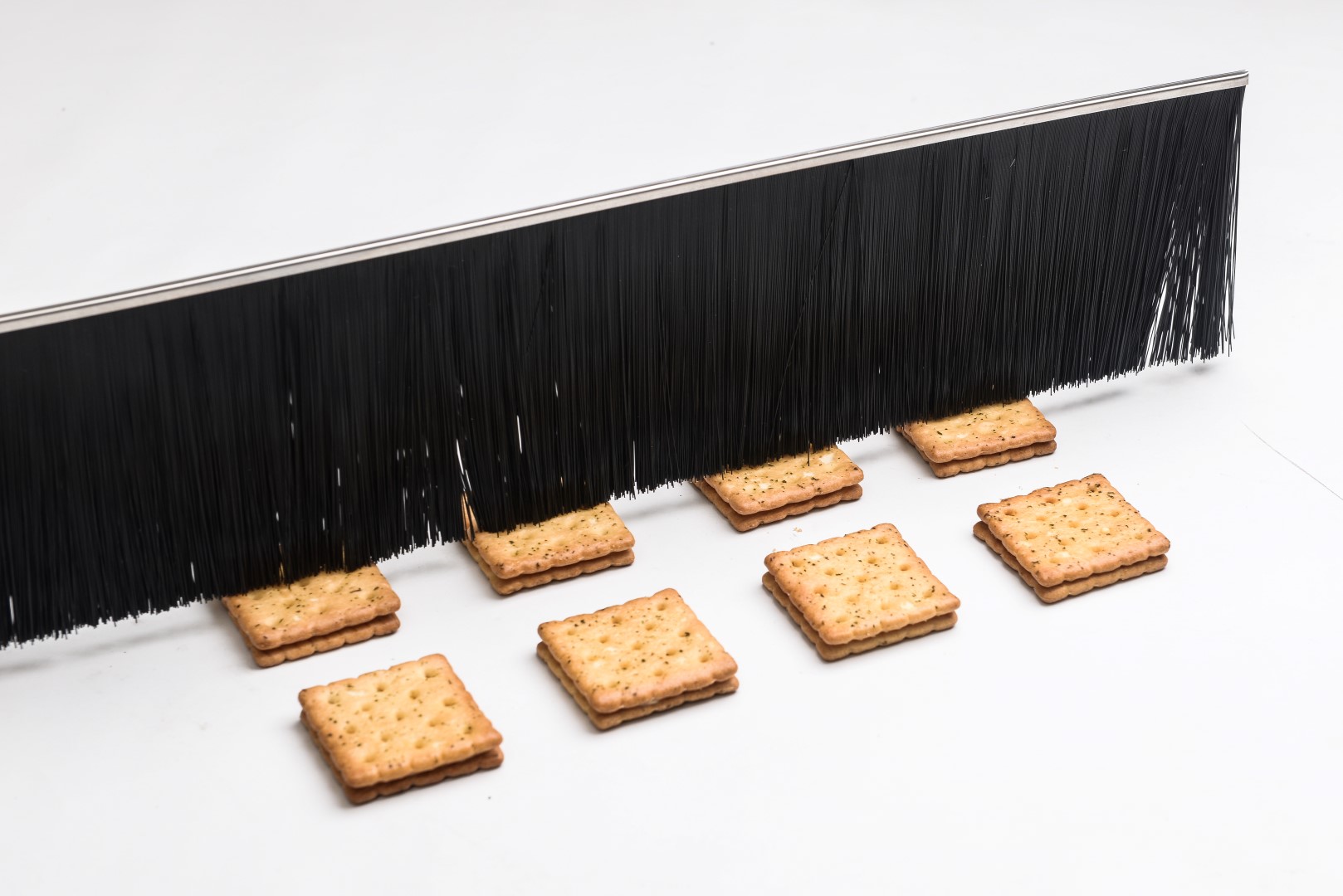
- Strip brushes — Guide and align food products along the production line, and can also gently apply glazes, washes, or coatings onto food surfaces as they pass through.
- Spiral and twist brushes — Clean pipes, nozzles, valves, and tube channels that standard cleaning tools can’t reach.
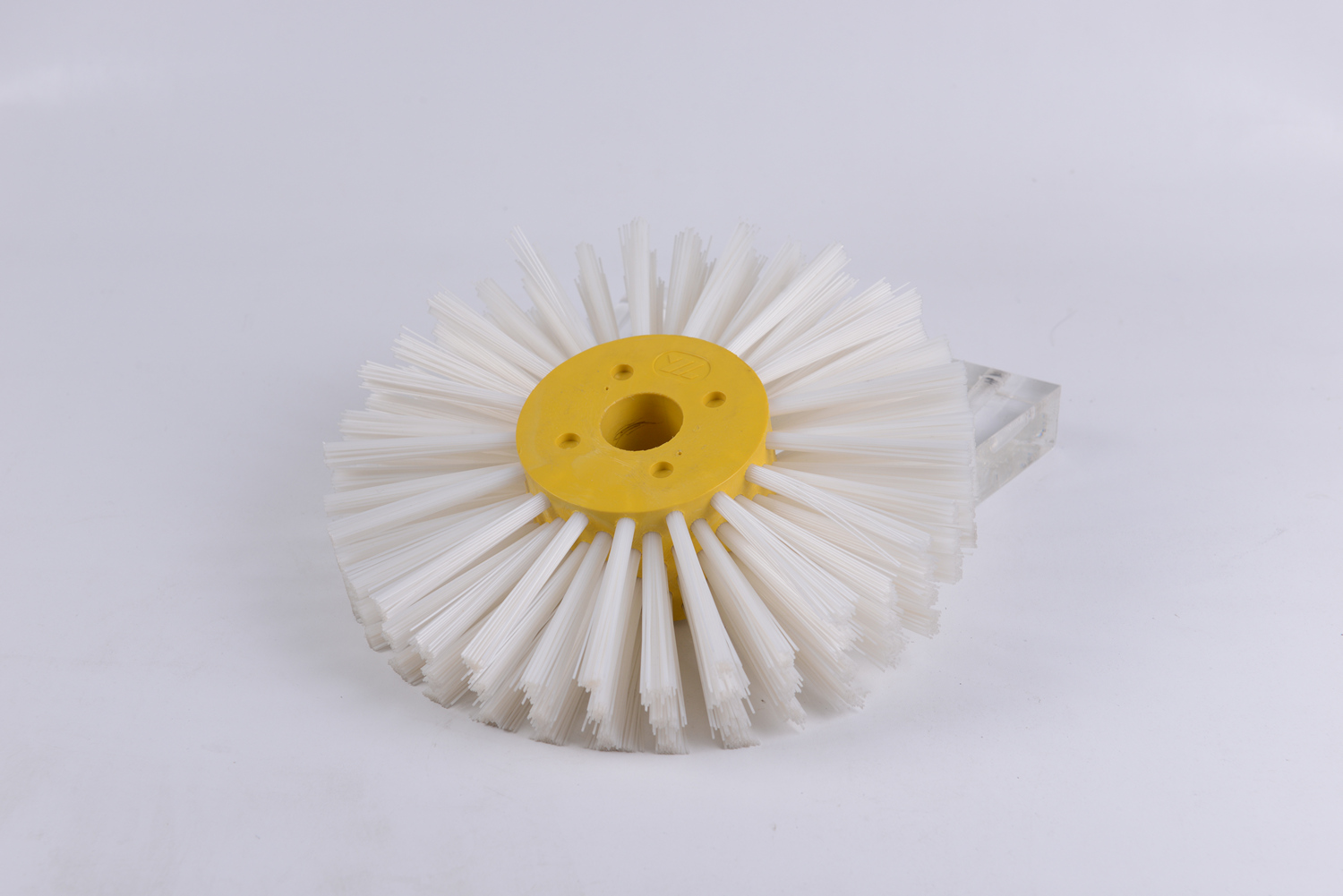
- Circular and disc brushes — Scrub equipment housings, vats, and flat surfaces during sanitation and equipment cleaning routines.
Why Custom Brushes Matter
Standard brushes are designed for average applications — but food processing lines rarely are. A brush that doesn’t fit your conveyor width exactly leaves uncleaned edges. A bristle that’s too soft won’t remove dried-on residue. A brush body that degrades in your sanitiser concentration creates a new contamination risk. For example, unsuitable materials exposed to aggressive sanitisers or repeated wash-downs may degrade over time and release particles into production areas.
Custom-manufactured brushes allow you to specify the exact material, trim length, density, and dimensions your line requires — and in the colour your HACCP zone plan demands. At Yew Lee Pacific Group, we manufacture all brush types to your exact specifications from our ISO 9001-certified facilities, giving food processors the consistency and traceability their compliance programmes need.
Need food-grade industrial brushes for your production line? Talk to our team — we’ll help you specify the right brush for every application.