
How the Wrong Brush Spec Can Cause Glove Defects on Your Production Line
By Yew Lee Pacific Group ・ 10mins read
If your glove production line is seeing a rise in defect rates — inconsistent beading, surface contamination, or uneven stripping — the instinct is often to look at the dipping compound, the former condition, or the line speed. But one factor that frequently gets overlooked is the brush specification.
Brushes play a direct role at several critical stages of glove manufacturing. When the spec is off, even by a small margin, the effects show up downstream as quality failures that are difficult to trace back to the source.
Here’s a closer look at how incorrect brush specs contribute to common glove defects and what to check.
1. Wrong Bristle Stiffness → Inconsistent Beading
The beading brush is responsible for rolling the cuff edge of the glove to form a clean, even bead. If the bristle stiffness (determined by filament diameter and material) is too soft, the brush won’t apply enough pressure to form a consistent bead — leading to flat or irregular cuffs that fail visual inspection.
On the other hand, if the bristles are too stiff, they apply excessive force and can distort the cuff shape or even cause the glove to slip off the former prematurely.
What to check: Filament diameter (measured in microns or mm) and fill material — nylon and polypropylene have different natural stiffness levels at the same diameter.
2. Incorrect Trim Length → Uneven Surface Contact
Trim length determines how far the bristles extend from the core of the brush. A brush with trim length that is too short will have reduced contact with the former surface, causing patchy or incomplete action — whether it’s cleaning, beading, or stripping.
Too long, and the bristles flex excessively under load, losing their effectiveness and wearing unevenly. This is a common cause of inconsistent output across a long production run, where the brush performs well early but gradually degrades.
What to check: Trim length relative to the working diameter of the brush and the clearance in your machine setup.
3. Wrong Core Diameter → Poor Fit and Vibration
If the brush core diameter doesn’t match your machine shaft specification precisely, the brush will not seat correctly. This causes vibration during operation, which leads to uneven bristle contact and inconsistent results on the glove surface — often showing up as surface marks or bead irregularities.
A loose-fitting brush can also migrate along the shaft during operation, causing it to act on areas of the former it wasn’t intended to reach.
What to check: Internal bore diameter, shaft length, and whether the brush uses set screws, keyways, or flanges to lock into position.
4. Incorrect Fill Density → Contamination or Coagulant Buildup
Fill density — the number of bristle tufts per unit area — affects how aggressively the brush acts on the surface. In cleaning or coagulant application stages, a brush with too low a fill density may leave gaps in coverage, resulting in uneven coagulant pickup and pinholes in the finished glove.
Too high a fill density in a stripping or cleaning brush can trap debris between the tufts, which then re-deposits onto the former surface and causes contamination in subsequent dipping cycles.
What to check: Fill density specification for each application stage — beading, cleaning, stripping, and coagulant application each have different requirements.
5. Wrong Bristle Material → Chemical Degradation
Not all bristle materials hold up equally against the chemicals used in glove production — latex compounds, coagulant solutions (typically calcium nitrate), and release agents. If the bristle material is incompatible, you’ll see accelerated wear, bristle shedding, or deformation of the filaments.
Shed bristles on a production line are a serious quality risk — they can embed in the glove surface and cause it to fail inspection or, worse, make it through to the end product.
What to check: Chemical compatibility of your fill material (nylon, polypropylene, natural fibre, or specialty filaments) against the specific compounds used at each stage of your line.
6. Incorrect Stripping Brush Spec → Gloves Left on Former or Damaged During Removal
The stripping brush is responsible for separating the finished glove from the former after drying and curing. It’s one of the most mechanically demanding brush applications on the line — the brush needs enough force to initiate detachment, but not so much that it tears or distorts the glove surface.
If the bristle stiffness is too low, the brush won’t generate enough contact pressure to reliably strip gloves off the former, causing gloves to remain partially attached and disrupting the production flow. If it’s too stiff or the fill density is too high, the brush can mark or tear the glove, especially at the cuff — which often goes undetected until final inspection.
Stripping brushes also tend to wear faster than other brush types due to the repeated mechanical loading. A worn stripping brush with shortened, splayed bristles will apply uneven force across the glove surface, leading to inconsistent stripping results across the width of the former.
What to check: Bristle stiffness and trim length relative to the glove material (nitrile, latex, or surgical), former surface finish, and line speed. Circular and roller brush configurations are most common here — ensure the brush diameter and rotation speed are matched to your machine setup.
The Underlying Issue: Brushes Are Often Replaced on Visual Condition Alone
One of the most common problems we see is that brushes are replaced only when they look worn — when bristles are visibly splayed or shortened. But a brush can be the wrong spec from day one and cause quality issues throughout its entire service life, never showing obvious signs of damage.
This is why it’s worth reviewing your brush specifications periodically, particularly when:
- You change your dipping compound or coagulant formulation
- You modify line speed or operating temperature
- You switch former suppliers or former surface material
- You’re seeing a gradual increase in defect rates with no other obvious cause
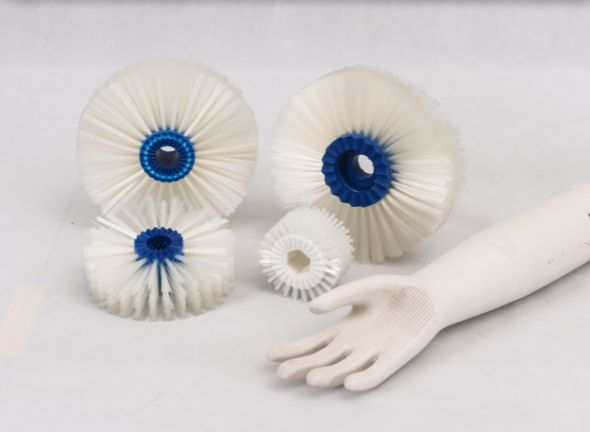
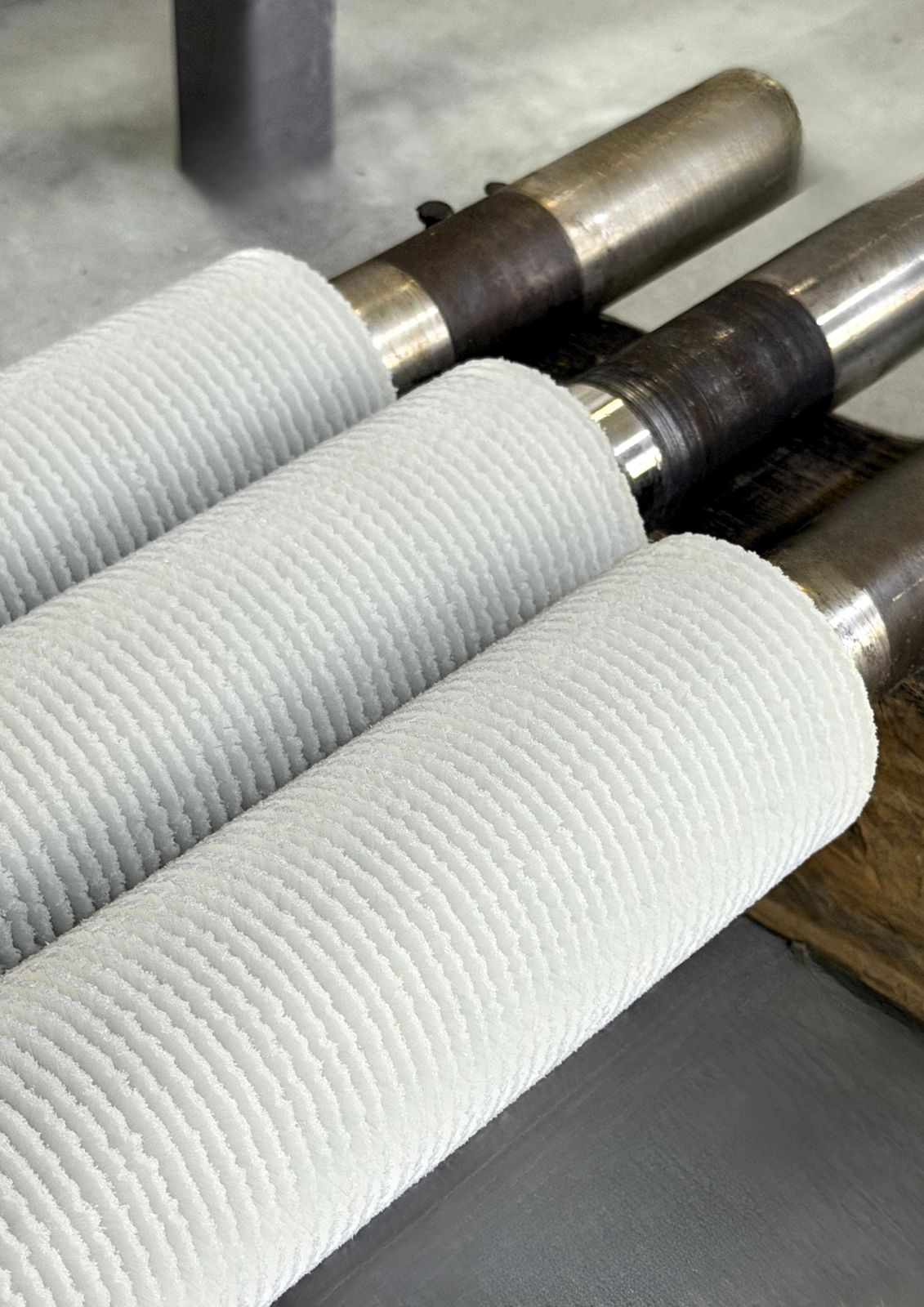
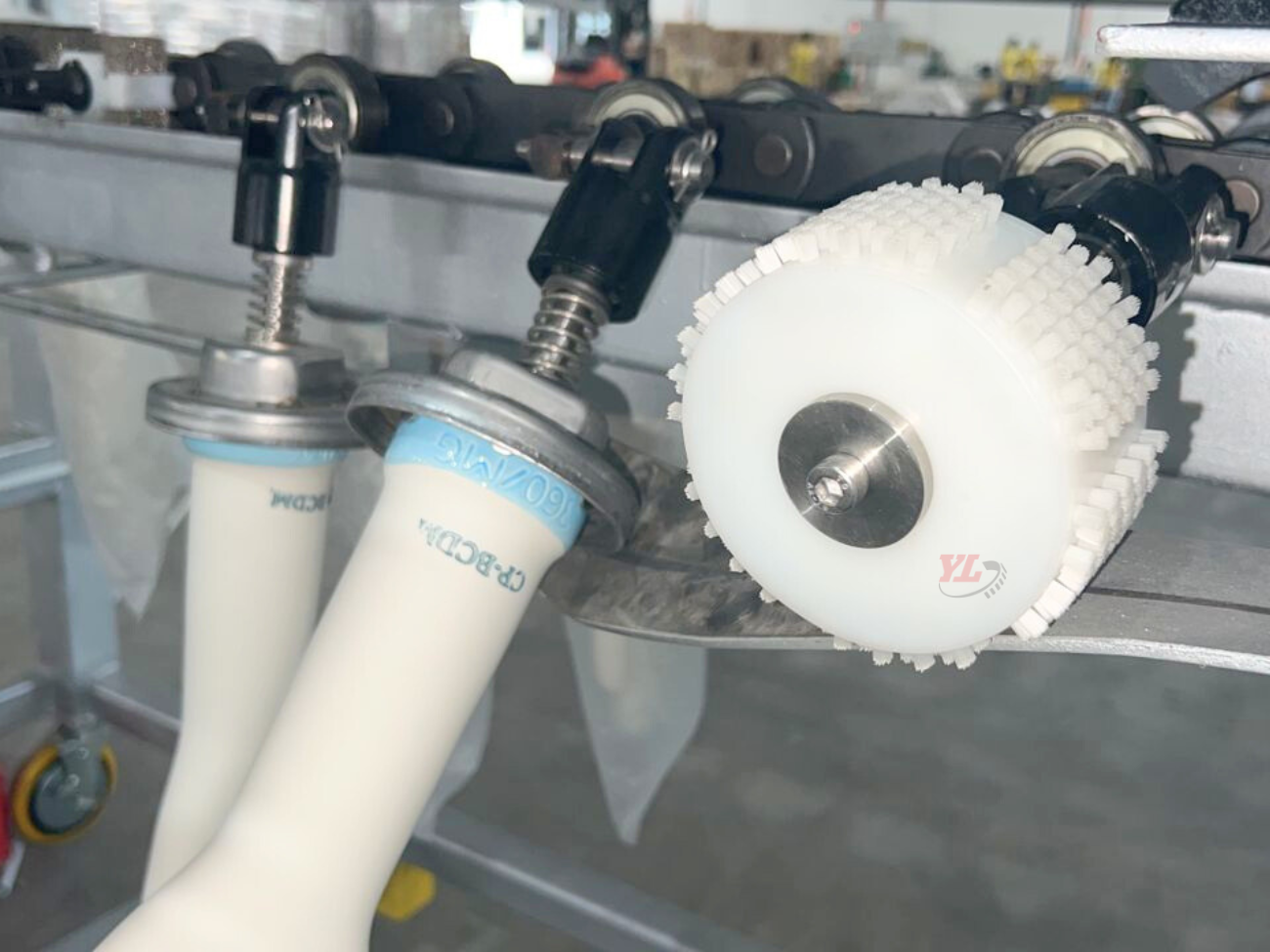


Some of the brushes used in Glove Production line
Every glove production line is different — former size, line speed, chemistry, and machine configuration all affect what brush spec will perform best. That’s why off-the-shelf brushes often aren’t the most reliable solution for technical applications like glove manufacturing.
At Yew Lee Pacific Group, we manufacture custom industrial brushes to your exact specifications, including core diameter, trim length, fill material, fill density, and bristle pattern.
Our team can work with your engineering or maintenance team to identify the right spec for each stage of your production line. Speak with our brush specialist.